Dies hier ist ein Test-Post. Wenn du ihn siehst, funktioniert der Hugo-Publishing-Workflow über den Hermes Agent direkt hier.
Keine große Aussage — einfach: ja, das geht.
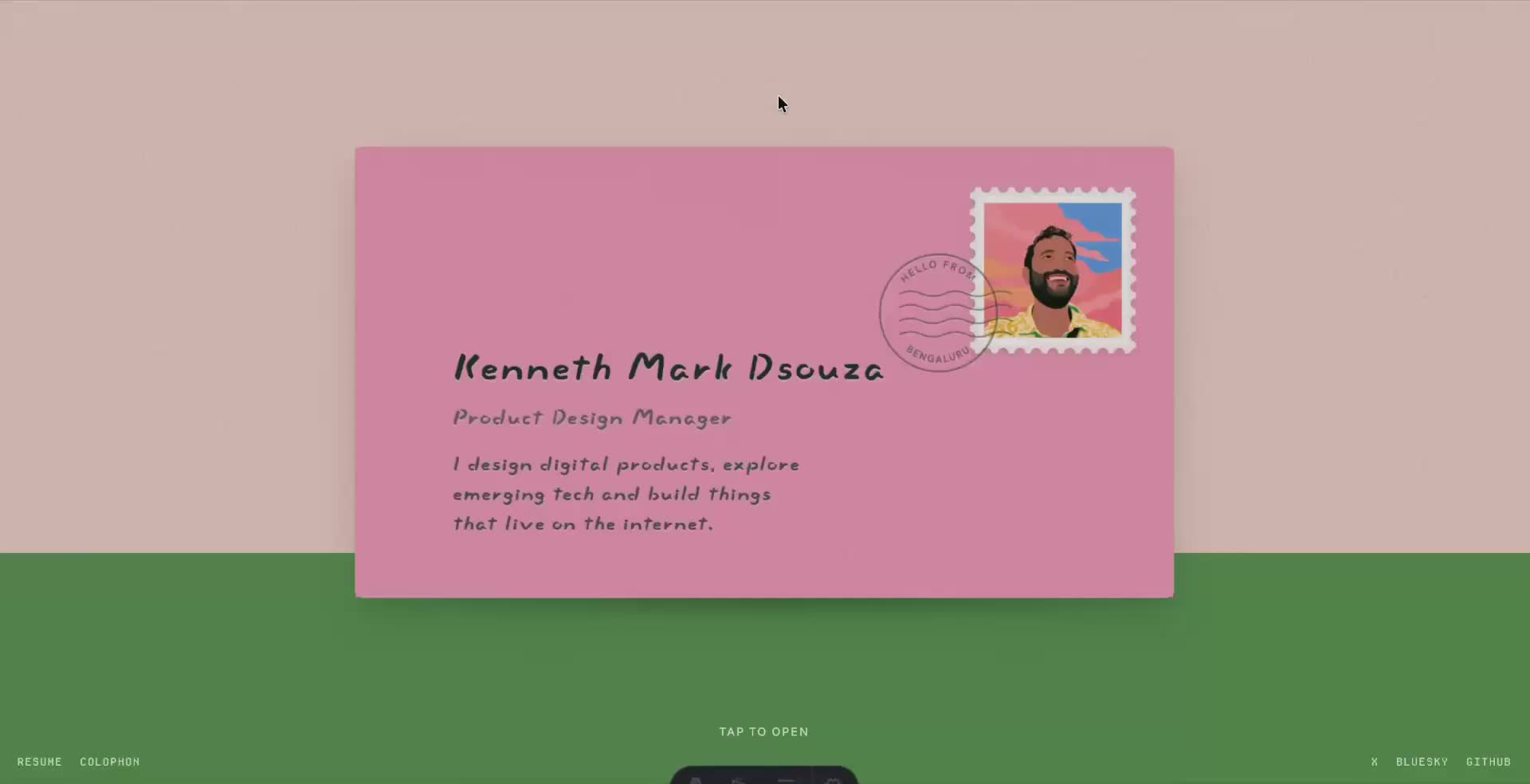
Shipped this to prod today. Check it out at Ken.cv
So many tech companies are setting on fire the little trust they had with our communities. They're heavily underestimating the consequences of their actions. The long term network effects among folks who care will be much larger than they expect.
also wrote a little bit about how this came about and how much i love personal websites and people who make weird things scott.is/writing/about/scott-v4
As summer shifts to autumn in a deluge of thunderstorms here in the north of England, I’m reminded that change is perpetual and unavoidable.
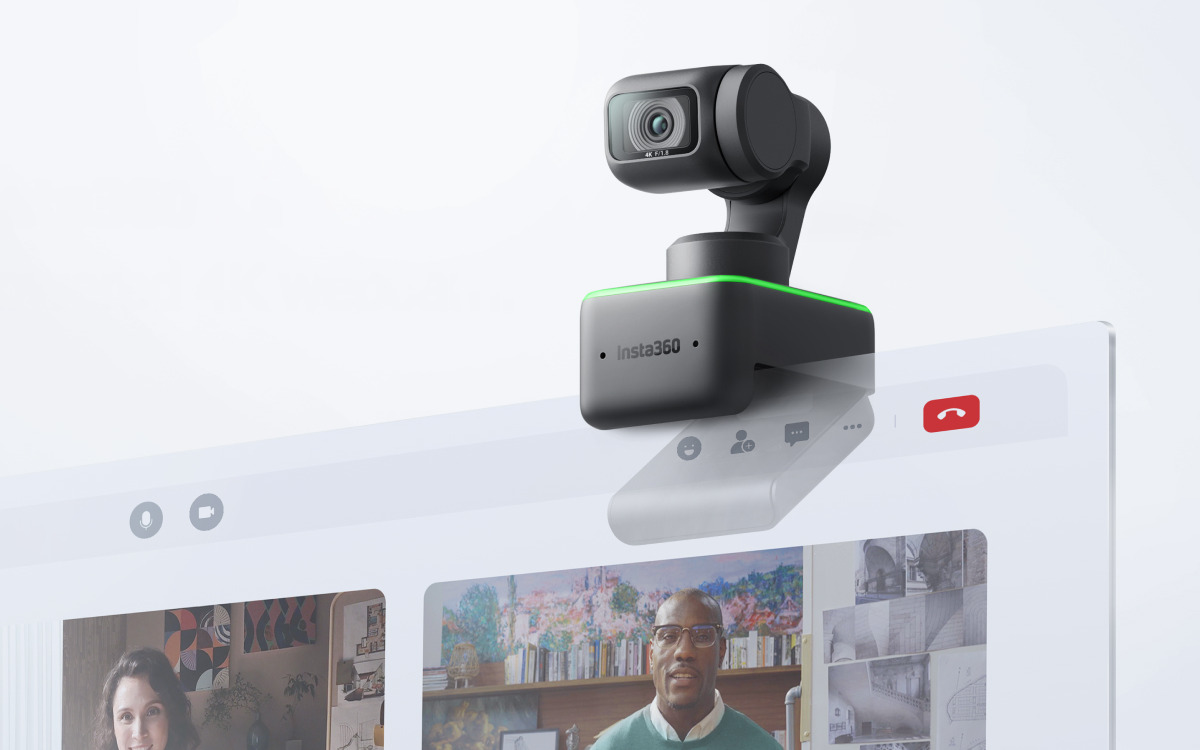
Turning Claude loose on the firmware of five USB and WiFi peripherals, and finding a command shell in a microphone, a defeatable webcam activity LED, and unauthenticated memory writes over the network.
Why and how we at Tempo decided to adopt the AT Protocol.
Different politics, identical structure: wealthy insiders, community infrastructure they didn't build, and openness performed just long enough to matter. The establishment always wants its own internet.

A lot of people seem to be realizing that knowledge work is mostly pointless. AI might give us the pleasure of finding out what happens if an entire class of workers loses faith in their careers.
Today, we're launching a world-class research lab dedicated to Open Source sustainability with a team of some of the most experienced people in the world.
Today, we're launching a world-class research lab dedicated to Open Source sustainability with a team of some of the most experienced people in the world.
https://www.youtube.com/watch?v=frjyb4_4Rlg&t=1s
Very excited about Interface Studies by @mskayyali.com—videos explicating and discussing ideas and problems in user interface design. buff.ly/laz8yko (via @kevinlynagh.com—thanks!!)
https://www.youtube.com/watch?v=frjyb4_4Rlg&t=1s
I wired my homepage up with playhtml so dragging a sticker, waving the hand, or starting a song all happen for everyone who's on the page at the same time. Notes on what I built and why I keep chasing this "we're all here together" feeling.
Why do we still call it "social media"?
The app that taught us to directly follow our favorite creators.
Dies hier ist ein Test-Post. Wenn du ihn siehst, funktioniert der Hugo-Publishing-Workflow über den Hermes Agent direkt hier.
Keine große Aussage — einfach: ja, das geht.
Shipped this to prod today. Check it out at Ken.cv
So many tech companies are setting on fire the little trust they had with our communities. They're heavily underestimating the consequences of their actions. The long term network effects among folks who care will be much larger than they expect.
also wrote a little bit about how this came about and how much i love personal websites and people who make weird things scott.is/writing/about/scott-v4
As summer shifts to autumn in a deluge of thunderstorms here in the north of England, I’m reminded that change is perpetual and unavoidable.
An introduction to diffusion language models and the research advances that underlie today's diffusion LLMs. We describe the building blocks of recent open-source models, starting from simple masking diffusion, and including techniques for iterative refinement, post-training, and variable-length generation. Material is adapted from workshop talks and lectures at <a href='https://realm-gen-workshop.github.io/'>ICLR 2026</a> and <a href='https://cfe.columbia.edu/content/mlss2'>MLSS 2026</a>.
And the media environment that didn’t catch this is getting this issue wrong
Why independent science will depend on compute, not just funding, and why providing it is the best bet we can currently make.
Turning Claude loose on the firmware of five USB and WiFi peripherals, and finding a command shell in a microphone, a defeatable webcam activity LED, and unauthenticated memory writes over the network.
Why and how we at Tempo decided to adopt the AT Protocol.

As web designers, we concern ourselves with how users move from page to page, but forget the needs of those whose purpose is to be still. Learn the design techniques that create a mental space for …
Different politics, identical structure: wealthy insiders, community infrastructure they didn't build, and openness performed just long enough to matter. The establishment always wants its own internet.

Mini human brains are being grown in labs all over the world. Soon, they could outthink neural networks.
A lot of people seem to be realizing that knowledge work is mostly pointless. AI might give us the pleasure of finding out what happens if an entire class of workers loses faith in their careers.
Today, we're launching a world-class research lab dedicated to Open Source sustainability with a team of some of the most experienced people in the world.
Today, we're launching a world-class research lab dedicated to Open Source sustainability with a team of some of the most experienced people in the world.

Your digital UI can come from the physical world.
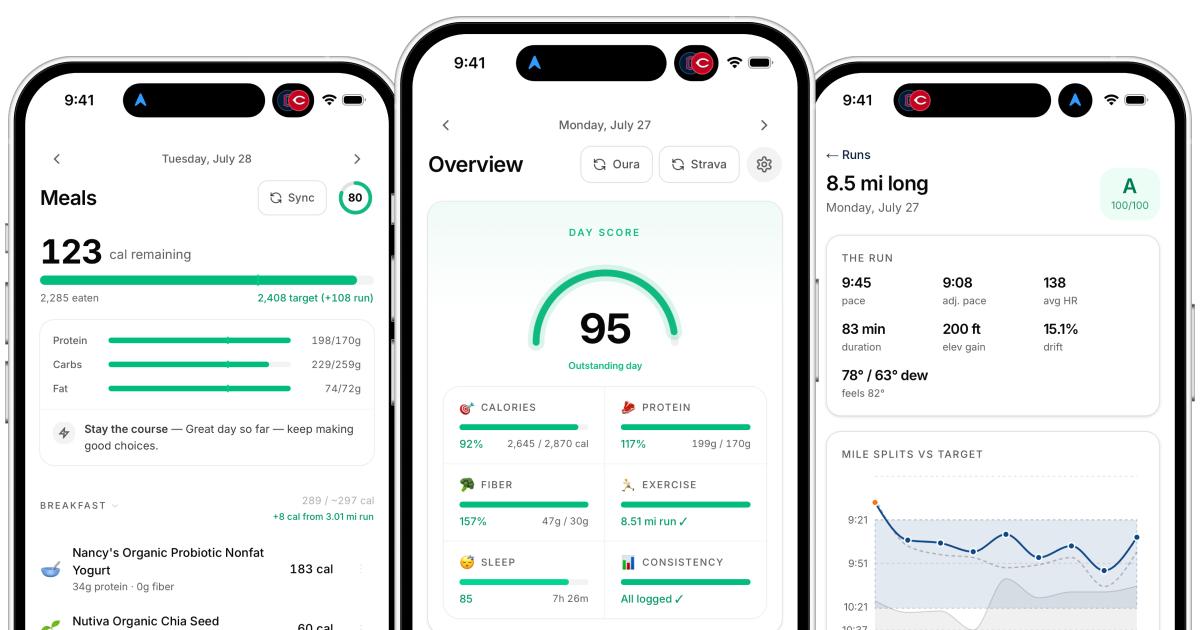
Robin Sloan wished for a HyperCard that could build a family app in a day. That world showed up.
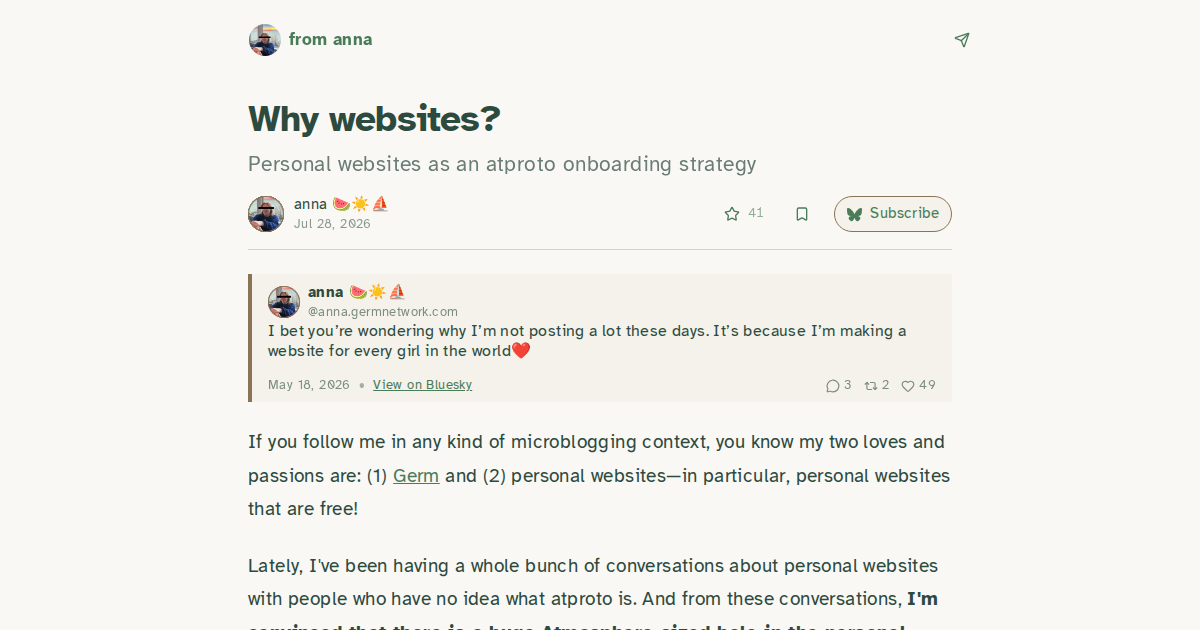
Personal websites as an atproto onboarding strategy
https://www.youtube.com/watch?v=frjyb4_4Rlg&t=1s
Very excited about Interface Studies by @mskayyali.com—videos explicating and discussing ideas and problems in user interface design. buff.ly/laz8yko (via @kevinlynagh.com—thanks!!)
https://www.youtube.com/watch?v=frjyb4_4Rlg&t=1s
I wired my homepage up with playhtml so dragging a sticker, waving the hand, or starting a song all happen for everyone who's on the page at the same time. Notes on what I built and why I keep chasing this "we're all here together" feeling.
Why do we still call it "social media"?
The app that taught us to directly follow our favorite creators.
xrpcs are cool i think
https://groups.csail.mit.edu/medg/people/psz/Licklider.html
Ein Rundflug durch die KI-Lage im Sommer 2026: chinesische Coding-Modelle, autonome Ransomware, explodierende Speicherpreise und Milliarden-Deals – aber auch offene Modelle, Forschung ohne Big Tech und ein Gericht, das Google für KI-Halluzinationen haften lässt. Was beeindruckt, was beunruhigt und was Hoffnung macht.
Jonathan KemperI'm really happy yet another way to enjoy The Index is available for people:
1. RSS piccalil.li/the-index/feed.xml 2. Web piccalil.li/the-index/ 3. Email 4. Standard.site via @standard-reader.app
Build your newsletter web-first and anything is possible.
AI has started blocking the Wayback Machine from chronicling the web. Considering that nearly 40% of websites disappear after 10 years, this will enforce a giant loss in collective memory.

The Internet Archive is a vital resource that has helped the search for truth in more than one global event, writes Anthony Cuthbertson, but it is in danger of becoming the latest collateral damage of the artificial intelligence boom
AT Protocol (atproto) is the right mix of useful, practical, personal, and fun. I think it could save the internet.
A from-the-ground-up walkthrough of how modern LLMs work, from tokens to transformer blocks to the next-token loop
What’s up with this? The spirit, of course, is “I want my Google Reader back.” I should be careful though: I imagine if we really did have it back exactly as it was, it would prob…
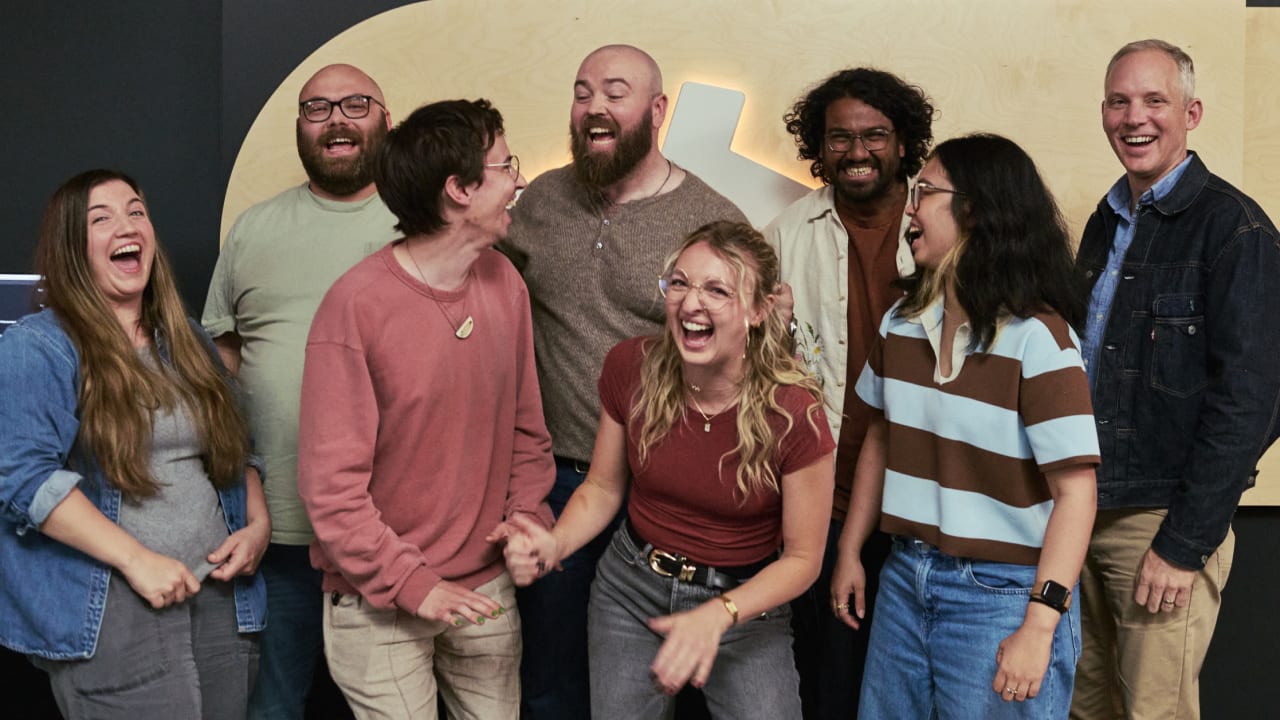
Myke talks to Steph Ango, CEO of Obsidian, about building tools for thought, working without meetings, managing knowledge with markdown and links, and how a seven-person team builds software used by millions.

AI is empowering a generation of vibe coders to build exactly what they want. The personal software revolution is here.

In Yesterday’s IO Keynote Google declared war on the remnants of the Web. (See longer description on their website.) TL;DR: They are pushing Search more into the “here’s your processed answer” direction that “AI Overviews” have established (you know, those AI snippets in current Search that are wrong about 10% of the time). So they […]

"We've been describing it as tech journalism for humans who like fun."
Tangled could become GitHub for agents Software agents need a place to work. Not just a chat box. Not just a filesystem on a rented VM. They need durable...

Posted on Wednesday 29 Apr 2026. 1,087 words, 19 links. By Matt Webb.

On quitting, the spread of AI, and the loss of an ideal.

Software brain is changing the world, but most people still aren’t buying.

We launched a complete archive of all eight years of the festival, along with a limited-edition merch collection to mark the occasion.
How the maintainer of the popular For You feed serves it from their living room!
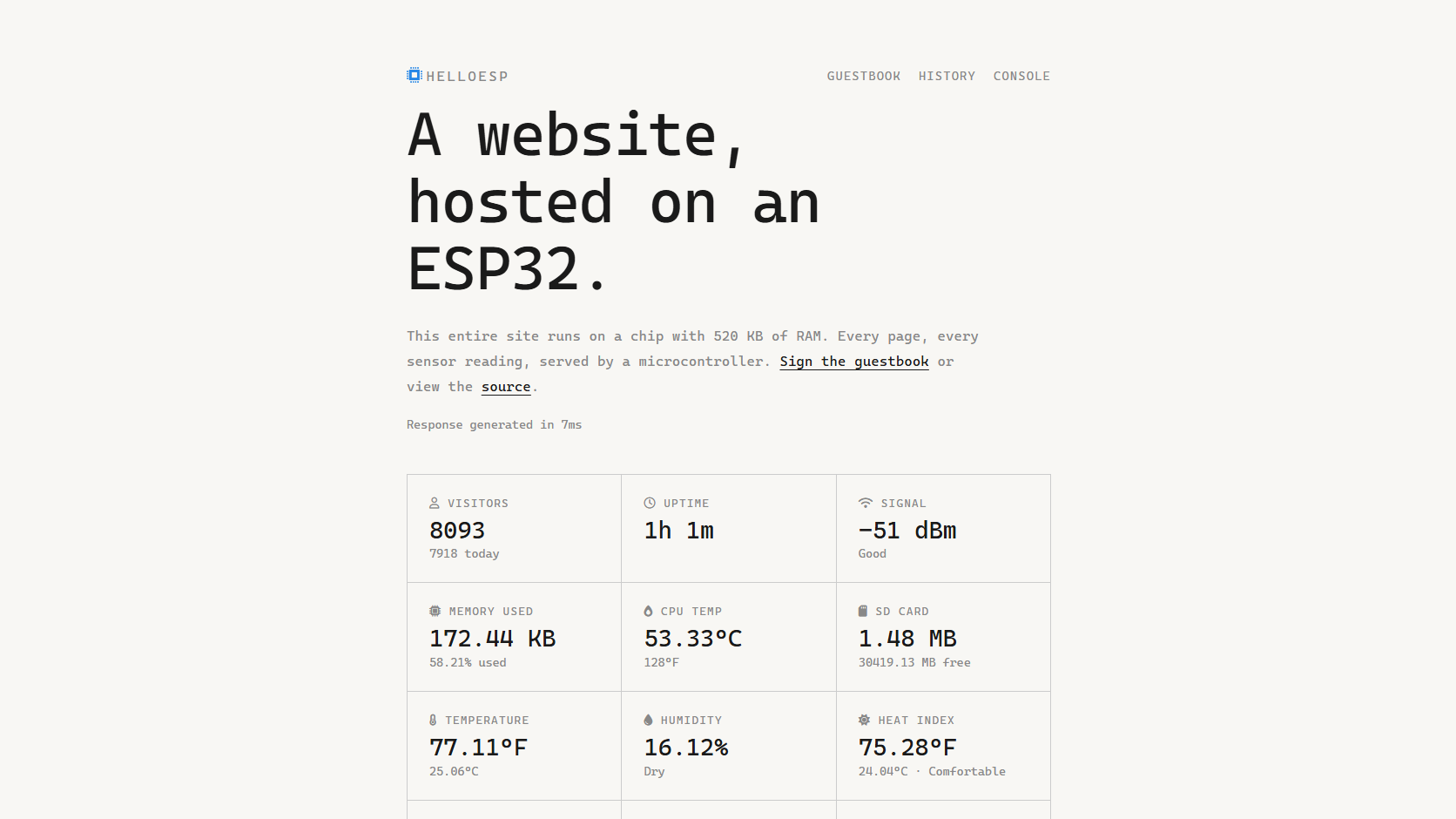
If you wanted to host a website, you could use any one of a number of online services, or spin up a server on a spare computer at home. If you’re a bit more daring, you could also do what [Te…
What I expect to come next and why, focused on the open-closed gap.
Comparing Leaflet to Radio Userland
https://kentwalters.com/posts/corners/
"If you want a Twitter-like experience, you can join Bluesky or Blacksky or Northsky or Eurosky and interact with 43 million other users who have already made the switch. Most of those users are on Bluesky, but accounts on Blacksky and other services work seamlessly with Bluesky accounts."
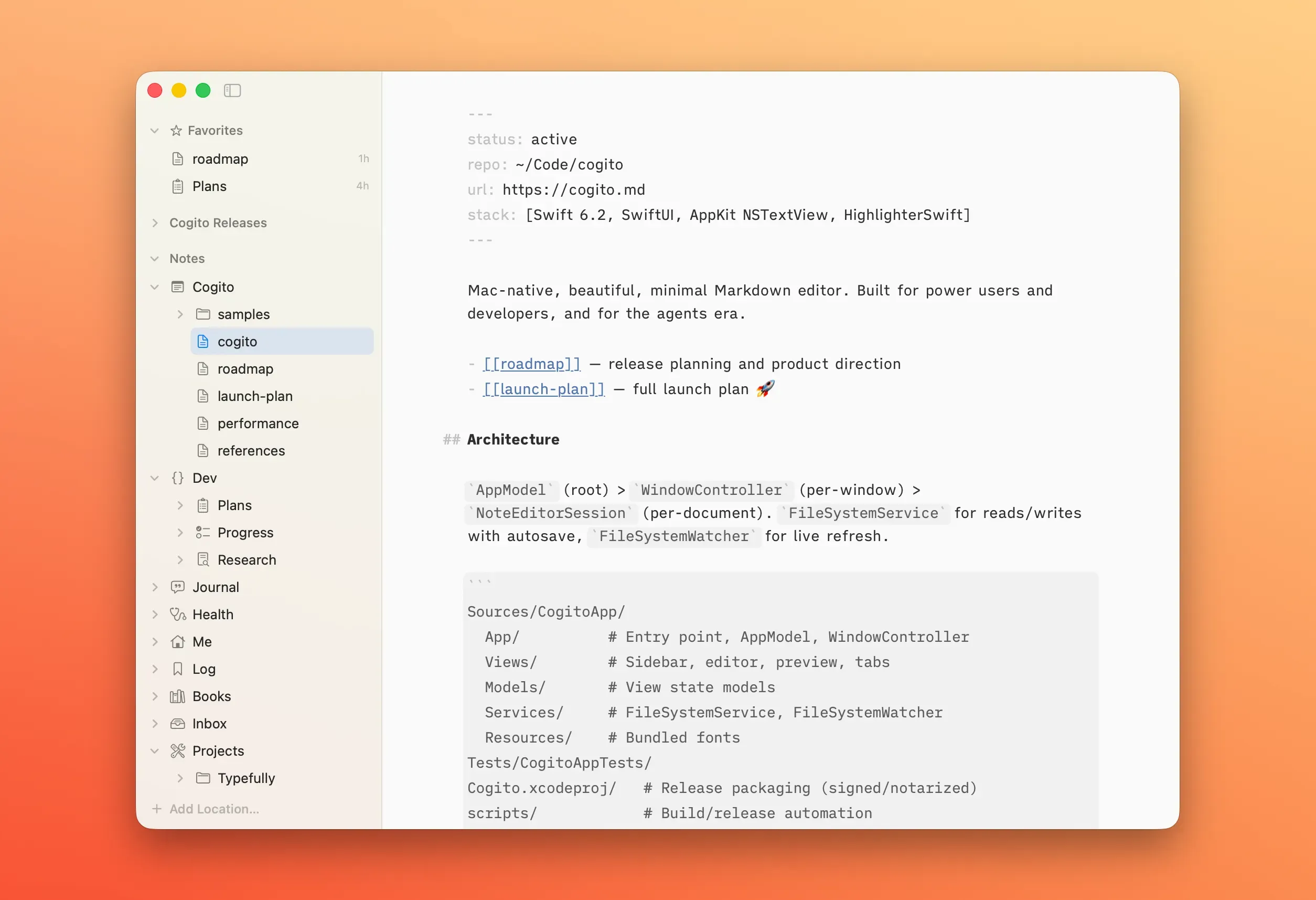
I built my dream Markdown editor for Mac.
→ Introducing Cogito (pronounced koh-gee-toh).
It started out of frustration: Obsidian is powerful but overwhelming. iA Writer is beautiful but feels built for a different era.
this is a great CSS read. blog.gitbutler.com/the-great-css-expansion
not to mention syntax improvements; nested CSS, CSS vars and mixing colors, et al.

CSS now does what Floating UI, GSAP ScrollTrigger, Framer Motion, and react-select used to require JavaScript for. Here is exactly how much that saves, why these libraries were painful beyond their size, and what the platform still hasn't figured out.
Zwischen dem ersten Terminal-Befehl und einer fertigen Web-App liegen heute keine Monate Programmierlernen mehr, sondern fünf Schritte und ein bisschen Experimentierfreude. Ein Leitfaden für alle, die Ideen haben, aber keine Lust auf Syntax.
Jonathan KemperThere's something quite exciting happening with AVIF and progressive rendering.
Some recent patches let you provide custom 'frames' as progressive passes, so you can provide e.g. smaller blurry versions of the full image to use as a progressive pass.


Feeds werden zentraler in der App
Kurations-Tools für das Team bei Live-Events, insgesamt mehr “live”-Gefühl
Drafts fehlen immer noch, Videos werden länger als 3 Minuten und sollen schneller hochladen, mehr als 4 Fotos, Threads sollen einfacher zu posten sein
“Who to follow”-Vorschläge sollen verbessert werden
Discover-Feed bekommt ein eigenes Team, um daran zu arbeiten, Exploration bei Topic-Tags, um Beiträge in bestimmten Nischen zu finden
Wie können andere Atmosphere-Apps Beiträge “ausdrucksvoller” machen? Eine wichtige Integration soll schon in Kürze kommen
People come here to experience events together — to discuss, make sense and laugh about things. We need more sense-making these days. We miss having fun on the internet. Bluesky is one of vanishingly few public networks where you can do both without feeling trapped in an extractive propaganda machine owned by a billionaire.
[…]
People are worn down by the mainstream platforms. They’re looking for something that feels more fun and more human. We know that’s possible and we’re building toward it.
As we head into 2026, we're entering a new phase for the Bluesky app. Last year was about scaling through rapid growth and getting the fundamentals in place. This year is about leaning into what's working and investing more intentionally in the things that make Bluesky different.
The more I think about it, the closer the ideas of user-friendliness and kind software look. With that said, there is something about the term “kind software” that appeals. I don’t know who would ever say a piece of software is “kind”, but that feels like the kind of goal it is worth striving toward when it comes to software design.
https://jamesg.blog/2026/01/25/kind-software
Not to get too melancholic about it, but it felt 2025 was the year the industry hit a low point, and dragged me down with it. You likely feel the same way, based on your overwhelming feedback (except for one of you who said Claude Code was “good, actually”). I don’t want to go as far as to call it a mid-life crisis, but more a general sadness and sense of ennui at a world seemingly hellbent on seeing the two possible ways of doing something, and choosing the bad one every time. 2026 has only accelerated this trend, whether it be represented in shows like CES, or the continued hosing down of fires with investor capital.
[…]
In a more practical sense, I’ve also found renewed interest and joy in all the stuff that Torb describes. Paring down my RSS feeds away from the general tech news and focusing on real people doing real things and thinking real thoughts has been nothing short of a revelation. All that cool, innovative, fun, creative, wonderful stuff that I missed is all still there, it’s just buried.

This is the year I stop tech getting me down.
Ein Rückblick auf das disruptivste KI-Jahr der jüngeren Vergangenheit: Vor einem Jahr gab es weder Vibecoding noch Deep Research, chinesische Modelle wie DeepSeek galten noch als Außenseiter und KI-Videos hatten keine Audiospur. Was hat sich seitdem verändert – und was kommt als nächstes?
Jonathan KemperKev Quirk betreibt seinen Blog so datensparsam wie möglich und verzichtet dabei ganz bewusst auf Analytics, also jegliche Quantifizierung, wer wie wann seine Inhalte liest. Das verstehe ich aus zwei Beweggründen: Einerseits kann das schnell zu unnötigem Performancedruck führen – was bei einem persönlichen, unkommerziellen Blog widersprüchlich scheint. Andererseits bringen Analytics einen technischen wie datenschutzrechtlichen Rattenschwanz mit sich, die mich bislang ebenfalls hauptsächlich daran gehindert haben, ähnliches mit gutem Gewissen zu implementieren.
Stattdessen hat Kev seine Leser:innen in einem Beitrag gefragt, wie sie seine Blogposts konsumieren. Das Formular ist mittlerweile entfernt, weil er innerhalb von nur 48 Stunden die 500 im kostenlosen Tarif des Tools enthaltenen Rückmeldungen ausgereizt hat, was schon mal einen groben Eindruck über das Engagement echter Leser:innen (und keiner Bots) gibt.
Herausgekommen ist bei der Umfrage, dass mit fast 85 Prozent die allermeisten die Website per RSS verfolgen. Was nicht überraschen sollte, aber vielleicht auch etwas verzerrt ist: Schließlich heißt das nur, dass die meisten, die innerhalb von 48 Stunden von der Umfrage erfahren haben, RSS verwenden, nicht aber, dass nicht auch ein größerer Teil der Leser die Seite etwa seltener direkt aufruft. Passend dazu hat Manuel Moreale gerade erst wieder seine “jährliche Erinnerung, RSS zu benutzen” veröffentlicht, und hat sich davon inspirieren lassen, seine eigene Umfrage zu starten.
See, you don’t need analytics to get an idea of who’s reading your stuff and how.
Two days ago I published a simple survey asking how you read the content I put out on this site. Here's the results of that survey.
I, on the other hand, am absolutely appalled by the magic that internet is. Even though having understood the finer intricacies of TCP/IP, it still feels like magic to me. The world however, has taken it for granted. We, collectively, have not only lost the fascination towards magic but have also left our inner child behind by becoming preoccupied with thoughts and activities which, in the grand scheme of things, will turn us into emotional robots.
I don’t know how humans behave. But I do know that a majority of the people have happily hopped onto the social media bandwagon. Everyone, even the more recluse and quiet loving people, have fal...
The IndieWeb is, as far as I can tell, a community of people who advocate certain digital principles and support each other in working towards those. The most famous principle is Publish (on your) Own Site, Syndicate Elsewhere. There are a variety of initiatives such as the monthly blog carnival (which I have hosted in the past) and online/in-person meetups.
The indie web, on the other hand, is a (very) much larger universe of websites run by individuals who wish to express their independent creativity.
[…]
Over the next five years to 2030, we are going to see an explosion of indie web creators. The technical hurdles that exist today in setting up a website will be blown aside by AI. Soon, anyone will be able to establish their own website simply by writing down what they want it to do.
Firstly, I think it's important to distinguish between the indie web and the IndieWeb. The IndieWeb is, as far as I can tell, a community of people who advocate certain digital principles and support each other in working towards those. The most famous principle is Publish (on your) Own Site,…
🔎 Kick-Start Your Academic Social Media Research with Our New Toolkit socialmedialab.ca/2025/12/15/social-media-research-toolkit-updated/
#AcademicSky #ComSky #DiscourseAnalysis #LibrarySky #PhDSky #PolCom #ResearchSky #ResearchMatters
Are you starting a new social media research project? Check out our new Social Media Research Toolkit. It is a list of 50+ social media research tools curated by researchers at the Social Media Lab at Ted Rogers School of Management, Toronto Metropolitan University. The toolkit was recently updated and includes tools used in peer-reviewed academic studies. […]
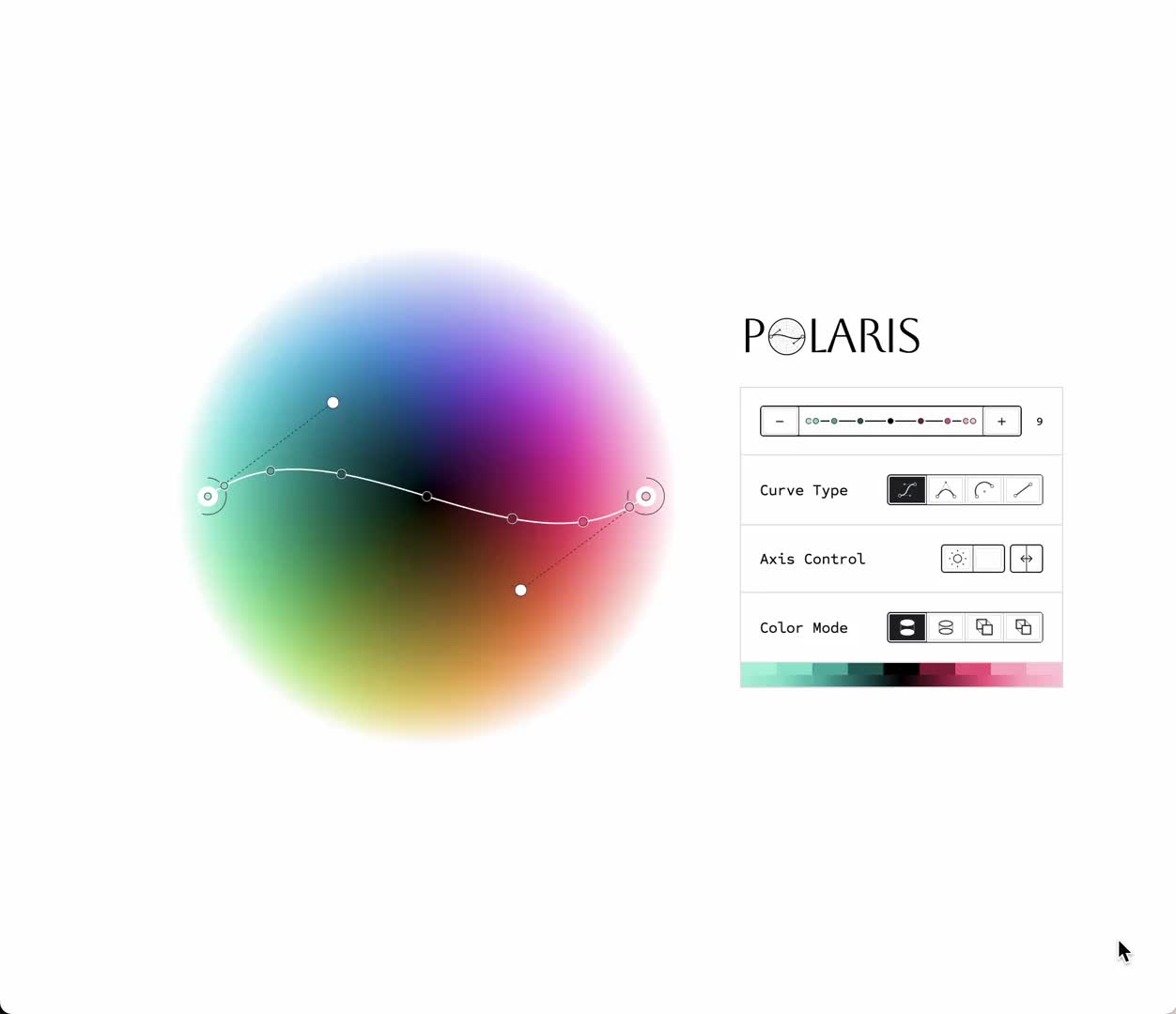
the UI is starting to feel right. early access feels close now.
roadmap: – figma named variables (plugin) – adobe illustrator & photoshop (plugin) – css & tailwind export – .pal export – procreate export – sketch export – affinity designer export
cook a packet of ramen noodles, toss out the flavor packet, drain the noodles, mix in some peanut butter, some rice vinegar, some sesame oil, some soy sauce, some chili-garlic, some honey or maple syrup, I AM TELLING YOU
Eine der größten Hürden beim privaten Bloggen ist die Illusion, immer up-to-date sein zu müssen. Aber warum eigentlich? Gute Inhalte sind auch Wochen oder Monate später noch lesenswert. Und Artikel müssen nicht fertig sein, bevor sie online gehen.
Jonathan KemperGibt mir Vibes irgendwo zwischen Flipper Zero und rabbit r1 und das nicht nur wegen der orangen Knöpfe. Leider erinnert es mich auch gleichzeitig daran, dass ich nicht der Maker bin, der ich gerne wäre. Klingt aber ganz spannend, sich die GPIOs direkt an eine Sprachmodell-API zu klemmen und nicht nur Antworten zu bekommen, sondern kleine Aktionen auszuführen. Er startet bei $129 auf Kickstarter und soll ab Juli 2026 ausgeliefert werden. Das überschaubare Finanzierungsziel von gut 4.000 € wurde bereits verfünfundzwanzigfacht.
With an ESP32-S3 microcontroller, AMOLED touchscreen, sensors, battery, storage, Wi-Fi, Bluetooth, mic, speaker, and GPIO expansion header already built-in, Kode Dot brings an easy and fast way to bring almost any creative idea to life. Code, upload, and demo, all from the palm of your hand, without clutter, breadboards, and limits.

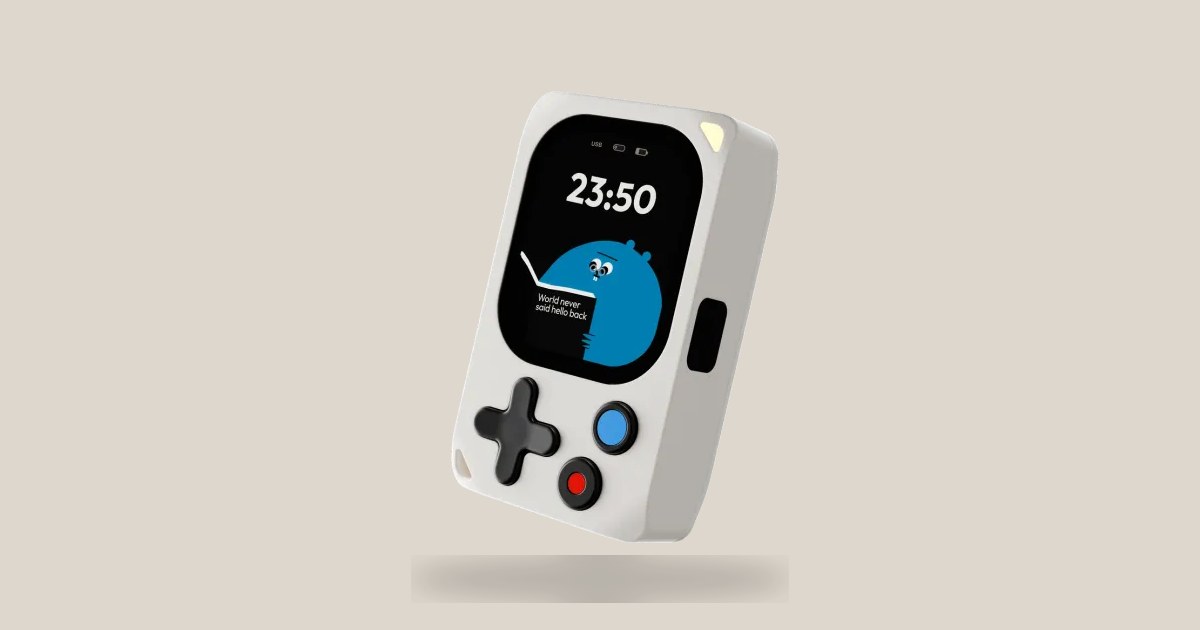
ESP32-P4 + C5, AMOLED touchscreen, wireless, sensors and real I/O in your pocket. You write the code — it becomes whatever you need. For makers, pentesters and geeks.
“Algotorial” bezeichnet eine Mischung aus algorithmischer und redaktioneller (editorial) Kuration und wurde offenbar von Spotify gecoint. Vor allem Meg Tarquinio, die ehemalige Head of Curation Strategy, scheint dafür verantwortlich. Sie redet in diesem Podcast darüber, der jetzt in meinen Lesezeichen landet.
Knowing what songs might be particularly “singable” is difficult to describe in algorithms. It might be the song that was on repeat last summer, or a particularly catchy refrain that is repeated over and over. Maybe it appeared in a TV show or movie recently to remind you of your teenage years. It’s hard to describe why, but you know it when you hear it. This is where human intuition comes in.
Ich habe inzwischen tatsächlich in den Podcast hereingehört und fand diese Stelle über die Notwendigkeit (oder vielmehr Überflüssigkeit) von individuellem Geschmack bei Kuration sehr aussagekräftig:
I actually am like anti-taste. I don’t know that I believe in good taste or bad taste. A lot of times I think there’s this myth around editors and curation that suggests, ‘Oh, this person loves this song so they’re going to put it into a playlist.’ But I think for good curators, or just curators in general, that’s not how it works.
Of course, if you’re a curator in a space that you love – like folk music – and you’ve grown up listening to folk music, you’re going to love a lot of the music that you’re programming. But you’re not programming it because you love it. That’s just kind of a correlation versus causation situation.
I think you’re programming it because you understand the space and you understand the audience, and you know that they would love it in this specific context. So I think the more that you can divorce your personal taste from what you’re doing, or at least have an awareness that that’s just an association versus a reason for anything that you’re doing – that’s the way to go for sure.
We are all so online, yet being online feels so solitary. I can’t feel the people across the feeds from me. Social media is designed for consumption of content, distribution of branding, broadcasting of prestige, not spontaneous encounters or the warm, funny, and weird moments that happen when humans simply exist together.
But what if we had the tools to reshape it? We could make our own public parks, cafes, bodegas, waterfalls, and mountains. We could carve out spaces that we inhabit and maintain, becoming active stewards rather than just users.
If dead internet theory posits that the internet will eventually become only bots, alive internet theory proclaims we will never let the open internet die. We will always find a way to look for each other, to answer a call for help, to share a laugh and an argument right after one another. If there’s one trait of the human race that every apocalypse movie agrees on, it’s our will to survive.
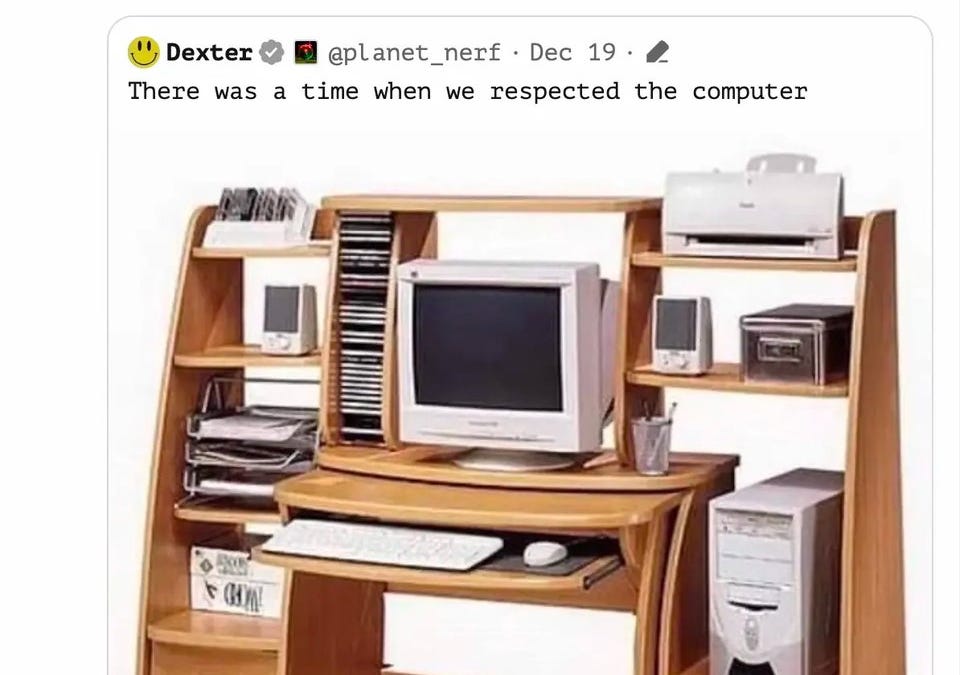
why the bots will never win and just hanging out online
The way our online writing world has been siloized, basically no one has that. We’re going to try to fix that, and not with just my software, but by setting some new standards for interop, extensions to RSS, so that there’s no exclusivity to making software for writers or publishers. That’s what I mean when I say something is “on the web.” If your system is not 100% replaceable, today, they you are not on the web and should not claim it. If you’re thinking about freedom, btw – this should be part of your big picture. So many smart people don’t want to know how our networks work, and that makes you a victim. And it’s not that hard to understand, no matter what people have led you to believe.
Dave Winer, OG blogger, podcaster, developed first apps in many categories. Old enough to know better. It's even worse than it appears.
Embeddings gehören zu den grundlegenden Bausteinen von Sprachmodellen. Leider sind sie oft nur schwer greifbar – doch dieses kostenlose Tool von Apple versucht das zu ändern. Direkt im Browser verarbeitet es Vektordatenbanken, visualisiert sie in einem zweidimensionalen Raum und liefert passende Diagramme. Ich weiß gerade noch nicht, wofür ich es brauche, aber kann sicher nicht schaden, das im Werkzeugkasten zu haben.
Embedding Atlas is a tool that provides interactive visualizations for large embeddings. It allows you to visualize, cross-filter, and search embeddings and metadata.
You can use Embedding Atlas directly from this website by loading your own data. Embedding Atlas will compute the embedding and projection in your browser. Your data does not leave your machine.
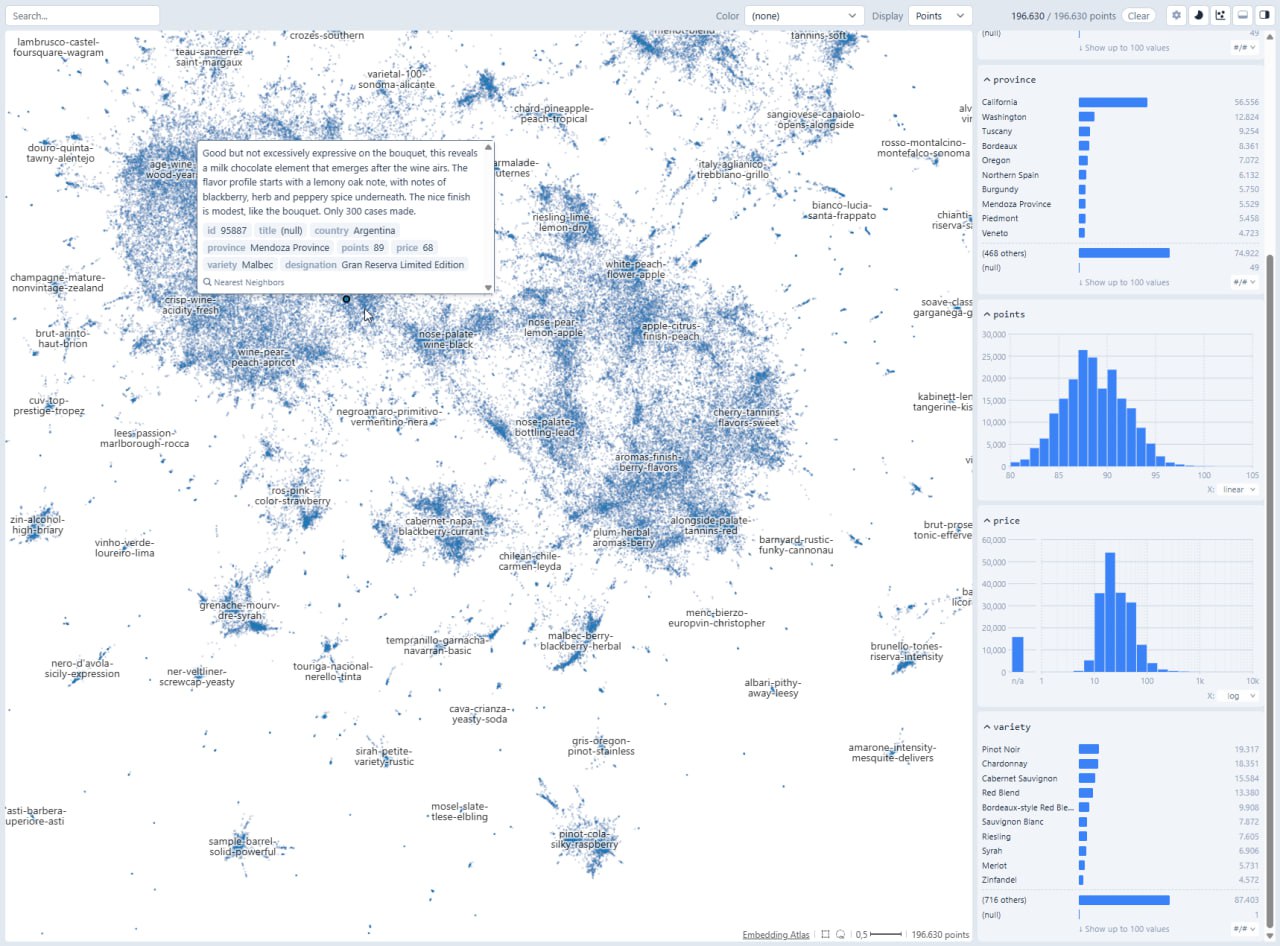
Interactive visualizations for large-scale embeddings. Effortlessly explore, filter, and search through rich metadata.
Substack-Autor @outsidetext aka henry hat ein interessantes Experiment veranstaltet. Er hat einer ganzen Reihe von Sprachmodellen, die ausschließlich in der Lage sind, Text zu verarbeiten, die Aufgabe gegeben, eine Weltkarte zu zeichnen. Der genaue Prompt:
If this location is over land, say ‘Land’. If this location is over water, say ‘Water’. Do not say anything else. x° S, y° W
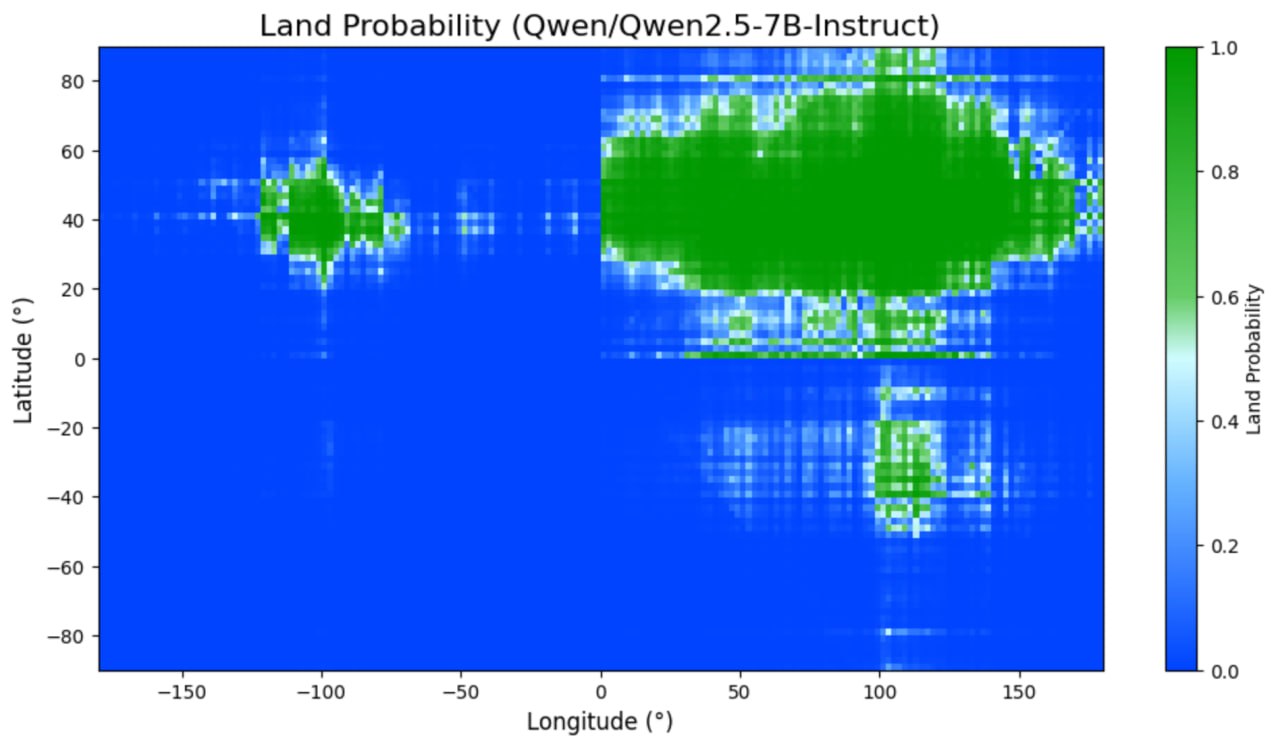
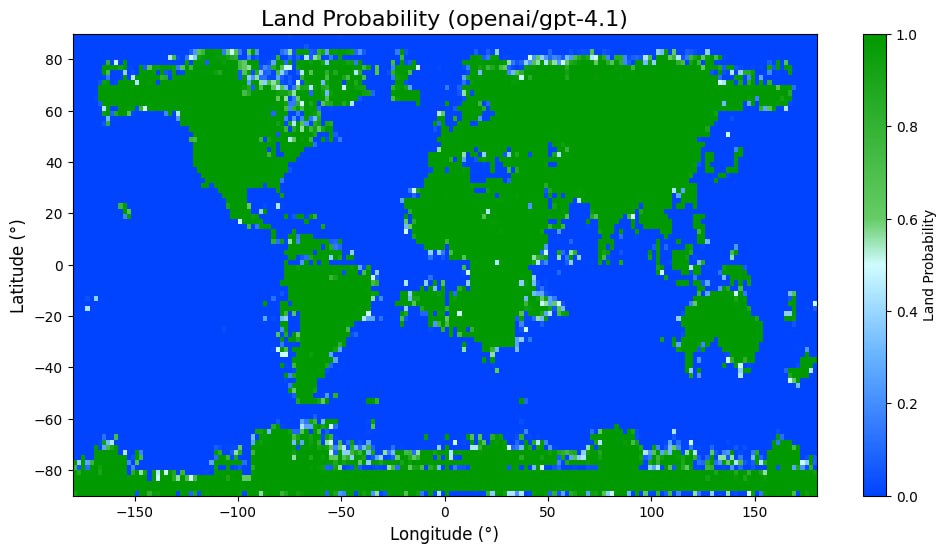
Offenbar eine schwierige Aufgabe sowohl für Open-Source-Modelle wie Llama von Meta, Qwen von Alibaba oder Googles Gemma als auch kommerzielle Modelle aus den Serien Grok, GPT und Gemini. Ganz grundsätzlich wird das Bild (wenig überraschend) immer schärfer, je mehr Parameter das Modell besitzt. GPT-4.1 schneidet sogar so gut ab, dass henry synthetische Geodaten im Trainingsmaterial vermutet.
In the earliest renditions of the world, you can see the world not as it is, but as it was to one person in particular. They’re each delightfully egocentric, with the cartographer’s home most often marking the Exact Center Of The Known World. But as you stray further from known routes, details fade, and precise contours give way to educated guesses at the boundaries of the creator’s knowledge. It’s really an intimate thing.
If there’s one type of mind I most desperately want that view into, it’s that of an AI. So, it’s in this spirit that I ask: what does the Earth look like to a large language model?
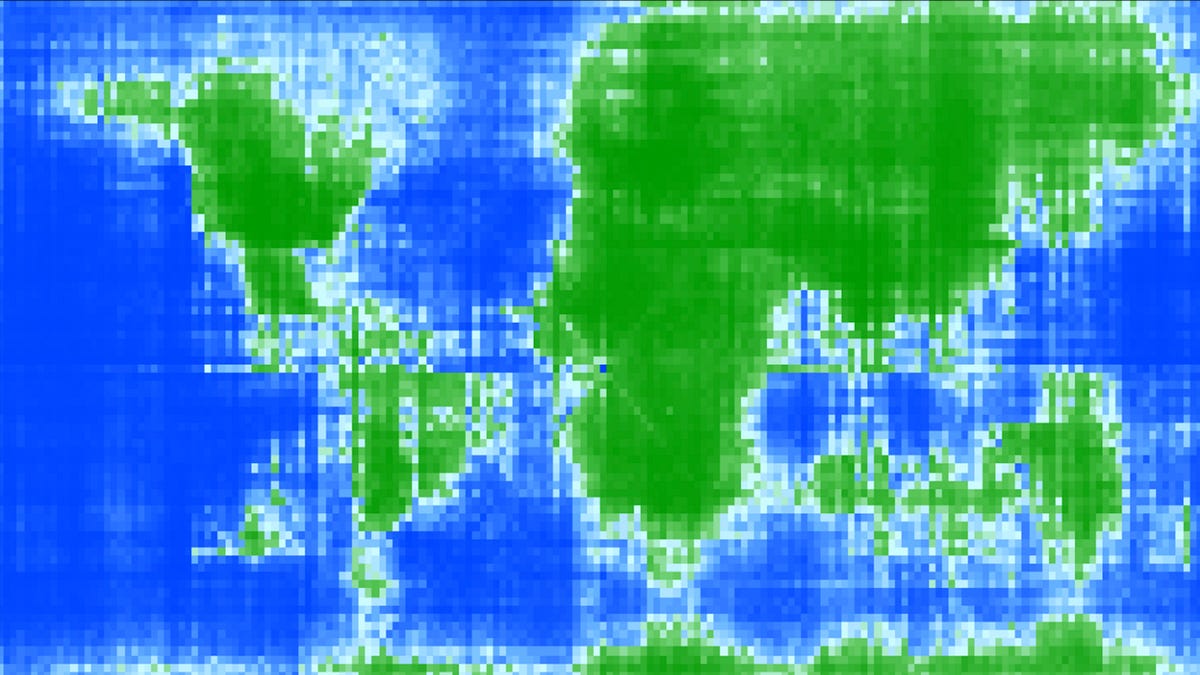
A brief exploration with many maps and many models
Ich habe mittlerweile mehr Vibecoding-Projekte angefangen, als ich zählen kann. Ein paar davon haben es sogar zumindest auf eine Website geschafft – etwa diese hier – die meisten davon verstauben aber in irgendeinem Ordner.
Entwickler Eike Drescher hat mit Spielwerk eine Plattform erschaffen, mit der ihr nicht nur KI-gestützt kleine Spiele prompten, sondern auch die Werke anderer in einem endlosen vertikalen Feed entdecken könnt. Hochpoliertes Gameplay dürft ihr hier natürlich nicht erwarten, das ist aber mindestens eine spannende Tech-Demo.
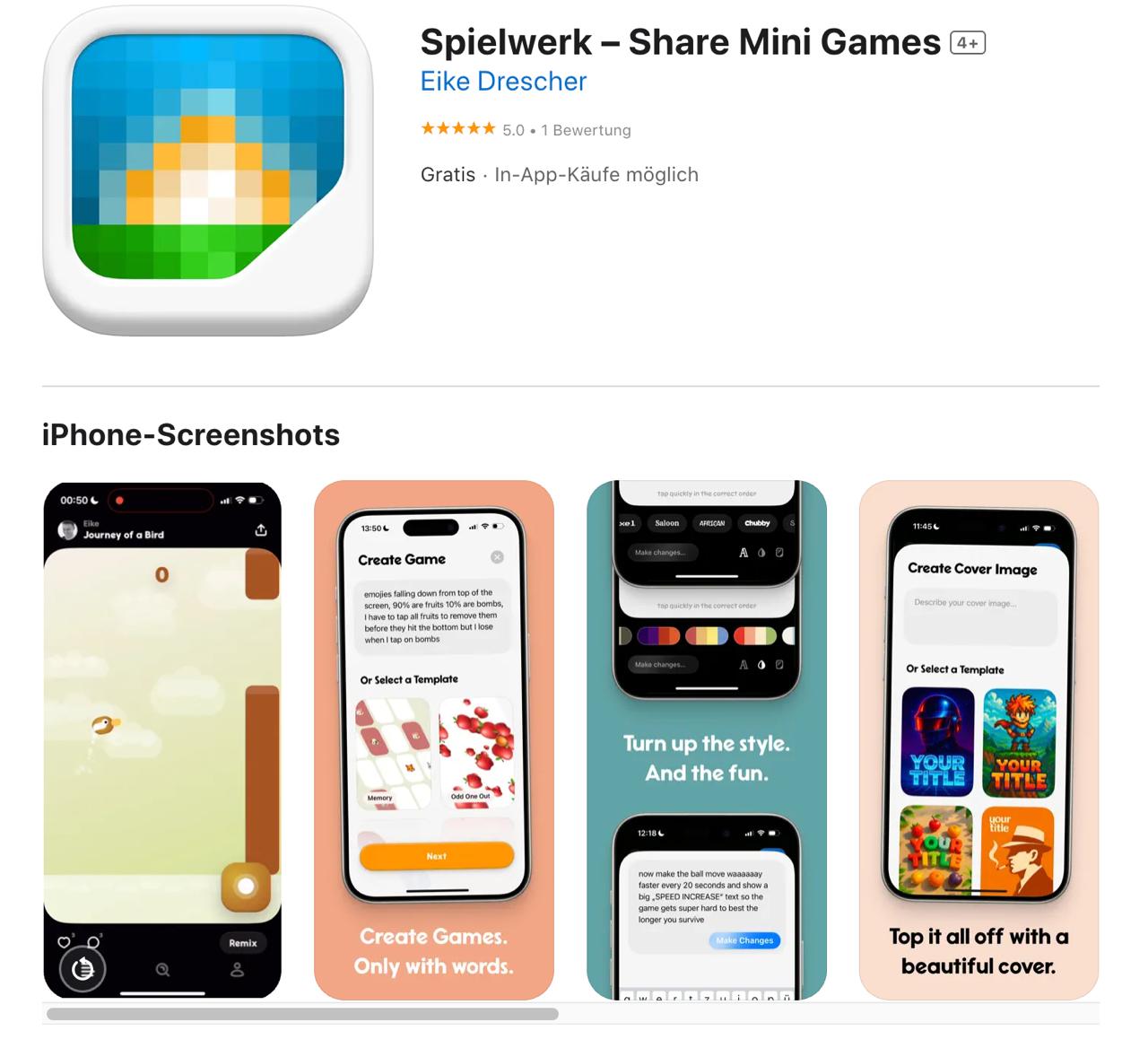
Die App ist kostenlos, aber auf iOS beschränkt und setzt eine Registrierung per Apple-Konto voraus. Wenn ihr kein iPhone zur Hand habt: Hinter vibeplay.surf steckt eine ganz ähnliche Idee.
Introducing Spielwerk – The Tiktok for vibecoded mini games! Scroll through an endless feed of mini games, all created inside the app by other people. You can like, comment and remix any game, and beat your friends high scores.
[…]
I believe a new medium is about to emerge. Mini pieces of software, created and shared by anyone as easily as a Tiktok video. This new software-as-interactive-content needs a new platform.
A platform that merges creation with distribution and gives everyone a place where they can create amazing interactive experiences for themselves and for others.
This is the big idea behind Spielwerk. Today we’re taking the first step with games.

Lade „Jamboree: Game Maker“ von Eike Drescher im App Store herunter. Sieh dir Bildschirmfotos, Bewertungen und Rezensionen, Benutzertipps und weitere Apps wie „…
Die 1996 veröffentlichte Schriftart planet kosmos ist nach eigener Definition „CD-ware“, wie sich noch heute in der mitgelieferten Readme-Datei lesen lässt:
All of the typefaces in the planet Font Family are CD-Ware and free for non-commercial use. That means, for each typeface you want to license for commercial use, you must mail us a CD with something you like: Music you have made, sounds you love, strange art or a peculiar piece of software… It can be a homebrew CD-R signed with a worn-out purple felt pen or a fancy commercial CD. No rules apply, but creativity is always appreciated 🙂
Such a CD in our mailbox buys you a personal, non-transferable but everlasting license to use that typeface for commercial projects. We normally send electronic license confirmations within a couple of days after the receipt of a CD in our mailbox. Just remember to include your email address with the disc, so we know where to send the confirmation.
Der dänische Designer Mads Rydahl scheint auch abgesehen davon eine spannende Persönlichkeit zu sein, unter anderem war er einer der ersten Mitarbeiter von Siri, noch bevor Apple das Start-up 2010 gekauft hat.

http://www.planet.dk/fonts/
KI-Browser schießen gerade an jeder Ecke aus dem Boden. Dia, Comet, Opera Neon – alle wollen die ersten im neuen LLM-optimierten Internet sein. Ein Nebenprojekt des schwedischen Entwicklers Simon Edwardsson hat nach nur zwei Wochen Bastelei „Spegel“ zu Tage gefördert: ein Browser, der direkt im Terminal lebt, Webseiteninhalte abruft und diese mit vorgefertigten Prompts durch Gemini 2.5 Pro Lite jagt.
Die Ergebnisse rendert Spegel dann direkt im Terminal inklusive Markdownformatierungen, aber ohne nervige Nebenprodukte wie Werbung. Dass diese Methode auf lange Sicht Medienunternehmen wichtige Einnahmen kosten würde, sei an der Stelle zugunsten der grundsätzlich genialen Nutzungserfahrung mal dahingestellt.
Adapting content to suit individual needs isn’t a new idea, think about translating books or summarising lengthy articles. However, this used to be slow and expensive. LLMs have changed this dramatically, making these transformations quick and easy.
Spegel (“mirror” in Swedish) lets you explore web content through personalized views using your own prompts. A single page can have multiple views, maybe one simplifying everything down to ELI5 or another highlighting key actions. It’s entirely up to you and your prompting skills.
Sometimes you don’t want to read through someone’s life story just to get to a recipe.
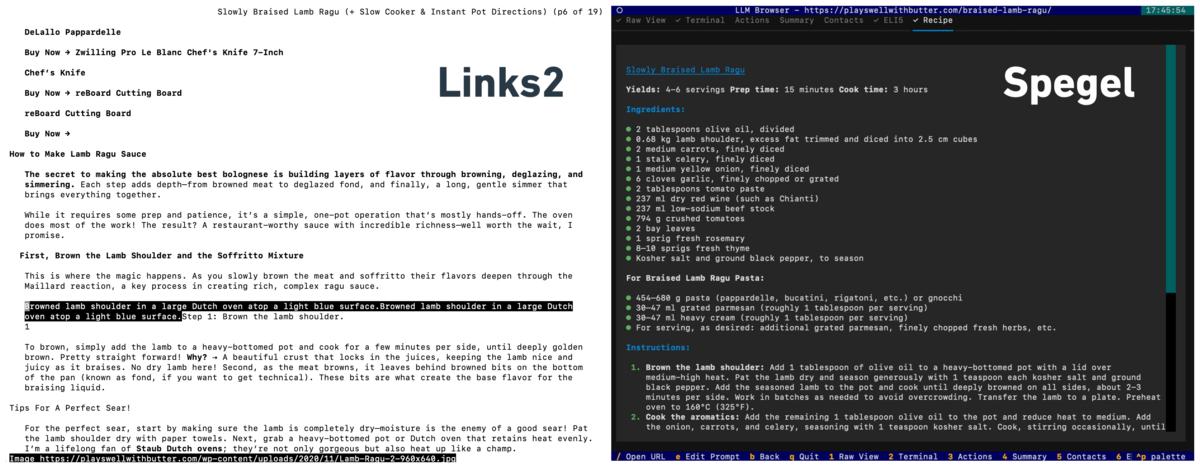
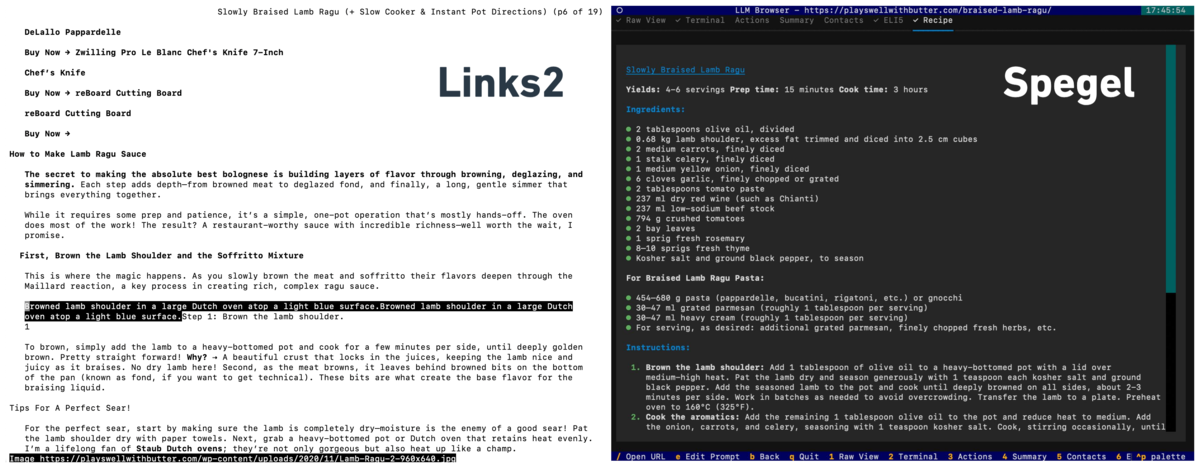
Spegel is a proof-of-concept terminal web browser that feeds HTML through an LLM before serving it as markdown in the terminal.
Die neue Designsprache von Airbnb hat für einige Furore gesorgt und das meiner Meinung nach zurecht: Sie holt mich nämlich auch vollkommen ab. So richtig “neu” ist der Skeuomorphismus zwar nicht, aber irgendwie lange durch Minimalismus und Flat Design in Vergessenheit geraten.
Internet-Start-up-Serien-Gründer Charlie Clark hat in Windeseile bereits 700 Icons nach Vorbild der Airbnb-Icons KI-generiert und stellt sie auf seiner sich ebenfalls im Aufbau befindlichen Plattform thiings.co als PNGs mit 1.024 x 1.024 Pixeln Auflösung zur Verfügung. Der Clou: Einzeln lässt sich jedes Icon kostenfrei herunterladen, wer das ganze Paket sowie alle noch in Zukunft hinzukommenden Grafiken haben will, zahlt einmalig 29 US-Dollar. Eigentlich ganz smart. Viel Spaß beim endlosen Scrollen!
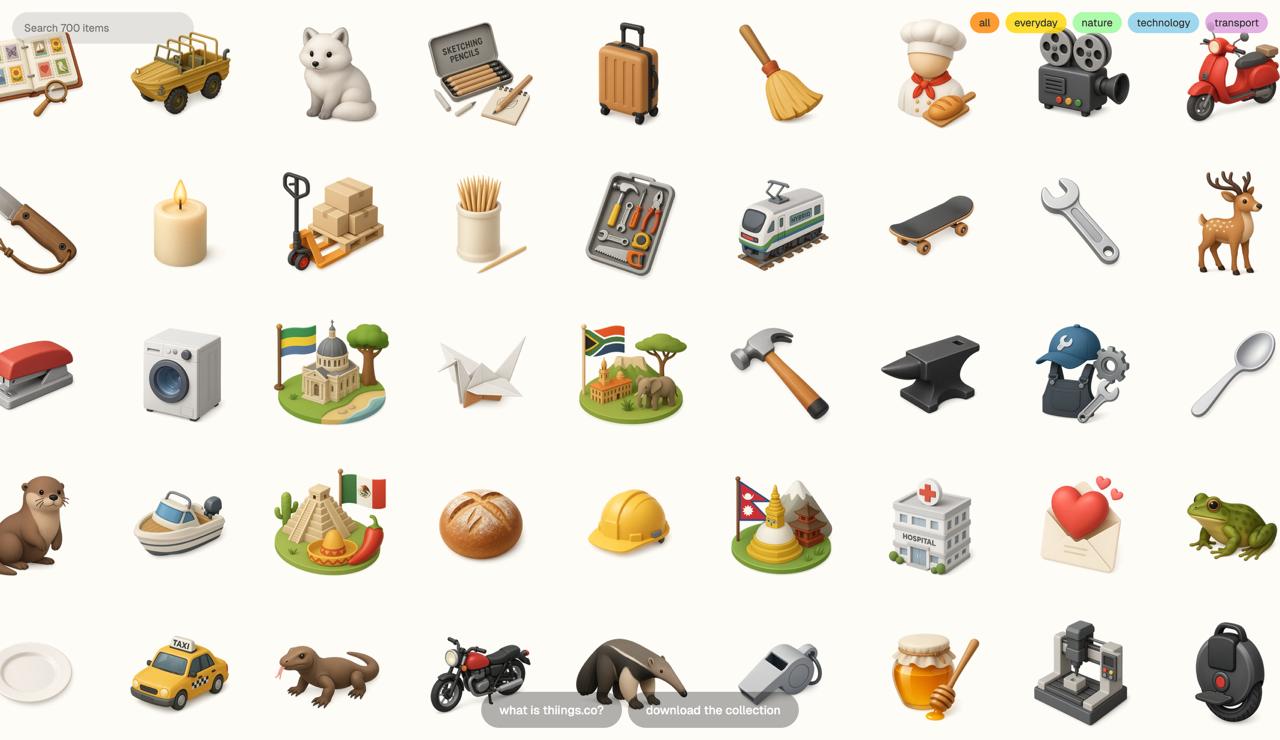
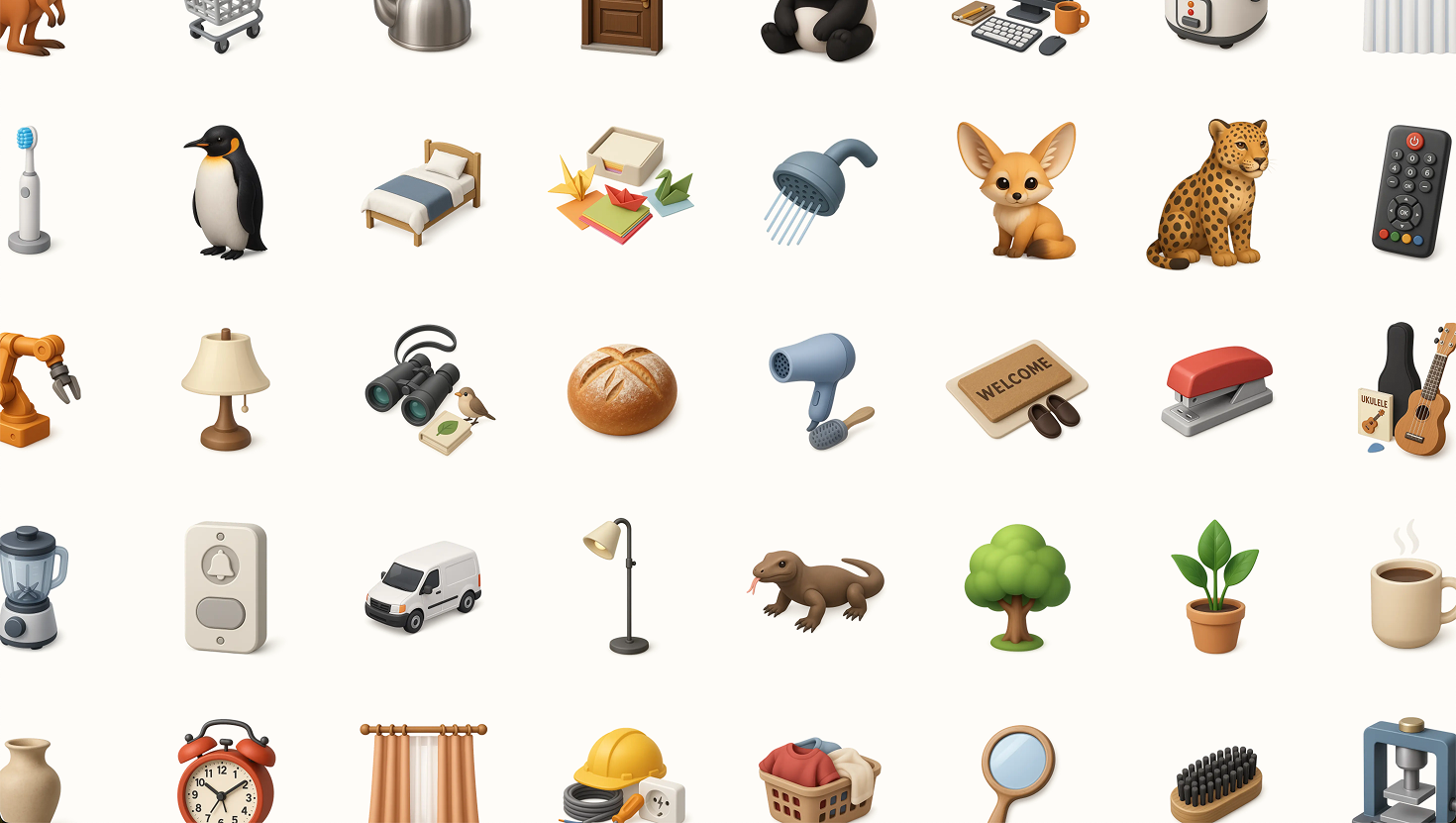
A growing collection of 10000+ icons, generated with AI. Perfect for designers and creative projects.
The elected Pope scored first in our metrics of Status (eigenvector centrality). While we weren’t try to “guess”, our aim was to show that a robust methodology, grounded in sound theory, can illuminate even the most obscure corners of human behavior and organizational dynamics.
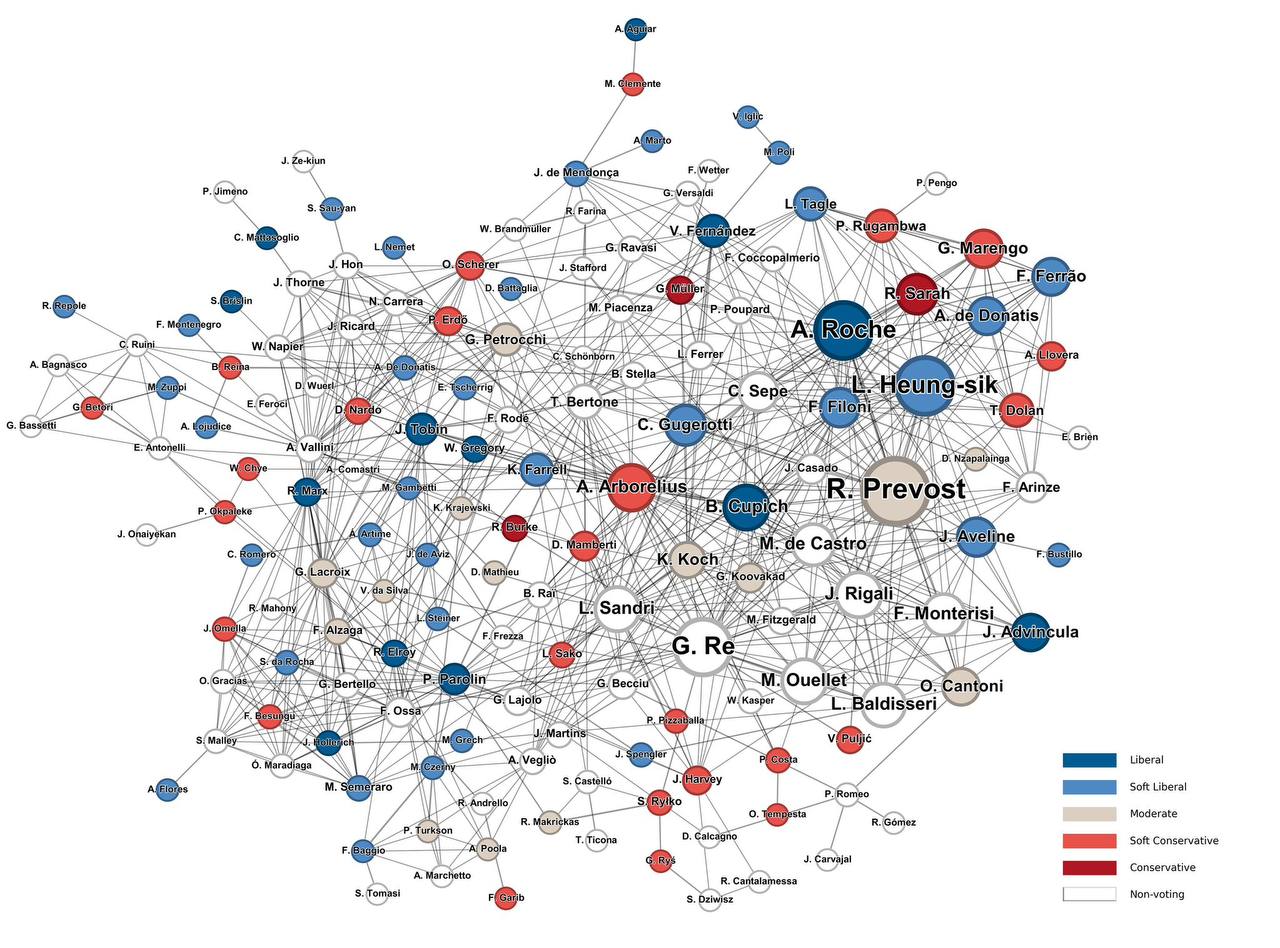

How network science can help us understand who will be the next Pope. The study by Soda, Iorio, and Rizzo reveals how status, information and alliances influence the papal election.
Ich hatte irgendwie das Gefühl, über genau so ein Projekt schon mal gestolpert zu sein – aber vielleicht habe ich das auch nur geträumt. Oder es ist eine doch nicht so wahnsinnig originelle Idee, auf die zwei Menschen irgendwann mal unabhängig voneinander gekommen sind (oder ich bin einfach nur neidisch, dass ich sie nicht hatte?)
Ausgehend von diesem X-Beitrag jedenfalls handelt es sich bei WikiTok um ein aktuelles Nebenprojekt von User aizk: Ganz wie bei TikTok könnt ihr hier unendlich weiterscrollen, nur statt Airfryer-Rezepten, Medikinet-Erfahrungsberichten oder singenden KI-Katzen gibt’s eben Wikipedia-Artikel über die nicht sonderlich erwähnenswerte, britische Fregatte HMS Valorous, die US-Fotografin Marion Post Wolcott oder die französische Kommune Aniche. Den Code findet ihr open-source auf GitHub.
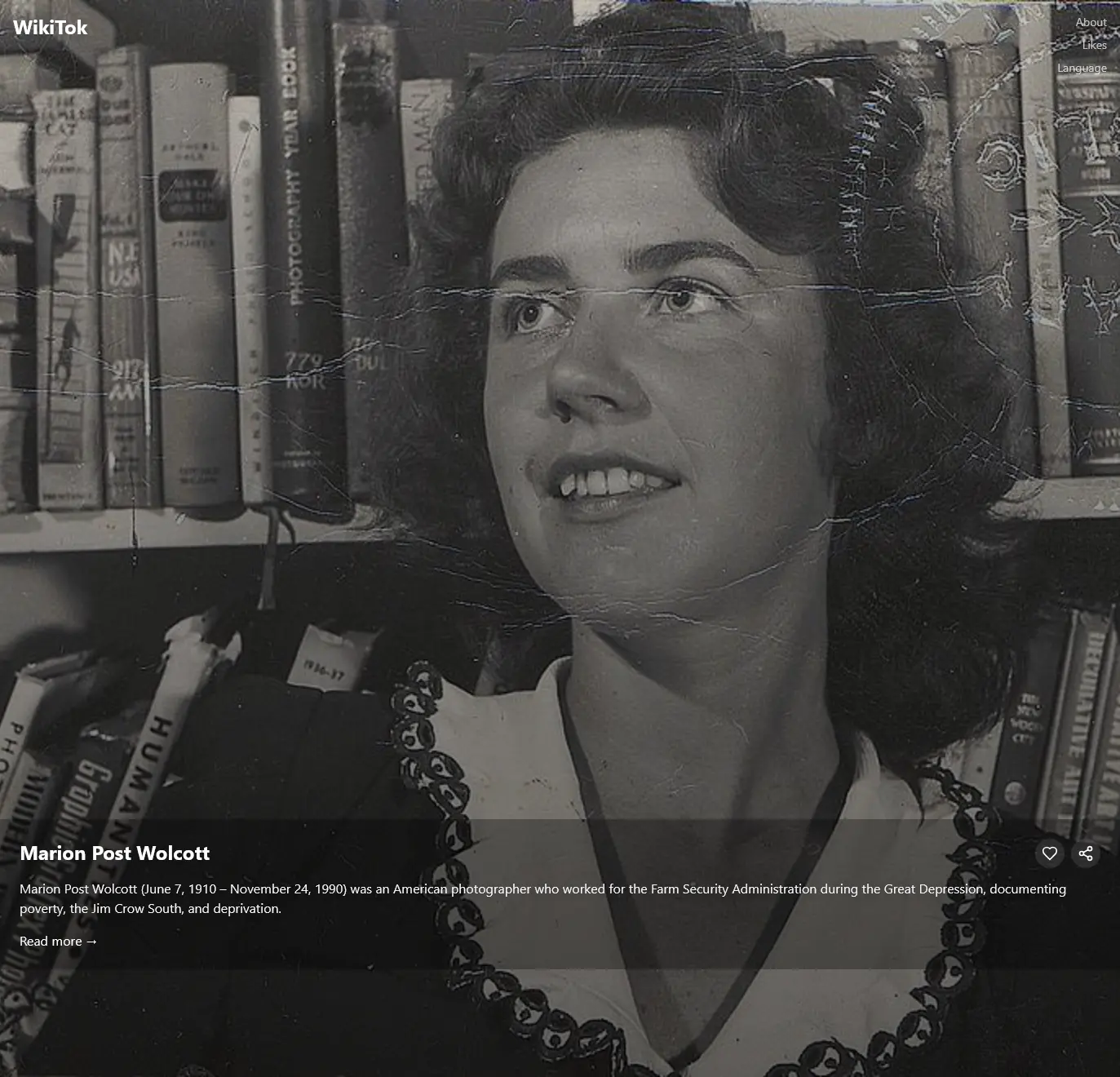
https://wikitok.vercel.app/
Meta sei dank sind Open-Source-Modelle nicht mehr so weit hinter kommerziellen Sprach-KIs. In kurzer Zeit sind immer neuere, bessere Llama-Modelle herausgekommen, teilweise auch extrem kleine, die für den Einsatz lokal auf dem Smartphone optimiert sind. Llama-3.2-1B etwa, das sich jetzt über die App fullmoon per Testflight kosten- und problemlos auf iPhones, iPads und Silicon-Macs installieren lässt – also nicht nur den neueren Geräten wie bei Apple Intelligence.
Ein paar Minuten dauert der Download, bei manchen scheint er sich auch aufzuhängen. Da empfiehlt Entwickler Jordan Singer, die App einmal zu schließen und wieder zu starten, den Bildschirm aber auf jeden Fall geöffnet zu lassen. Bei mir ging die Installation ohne zu meckern durch, danach präsentiert sich eine rudimentäre Chat-Oberfläche, mit der man mit Llama-3.2-1B ins Gespräch kommen kann.
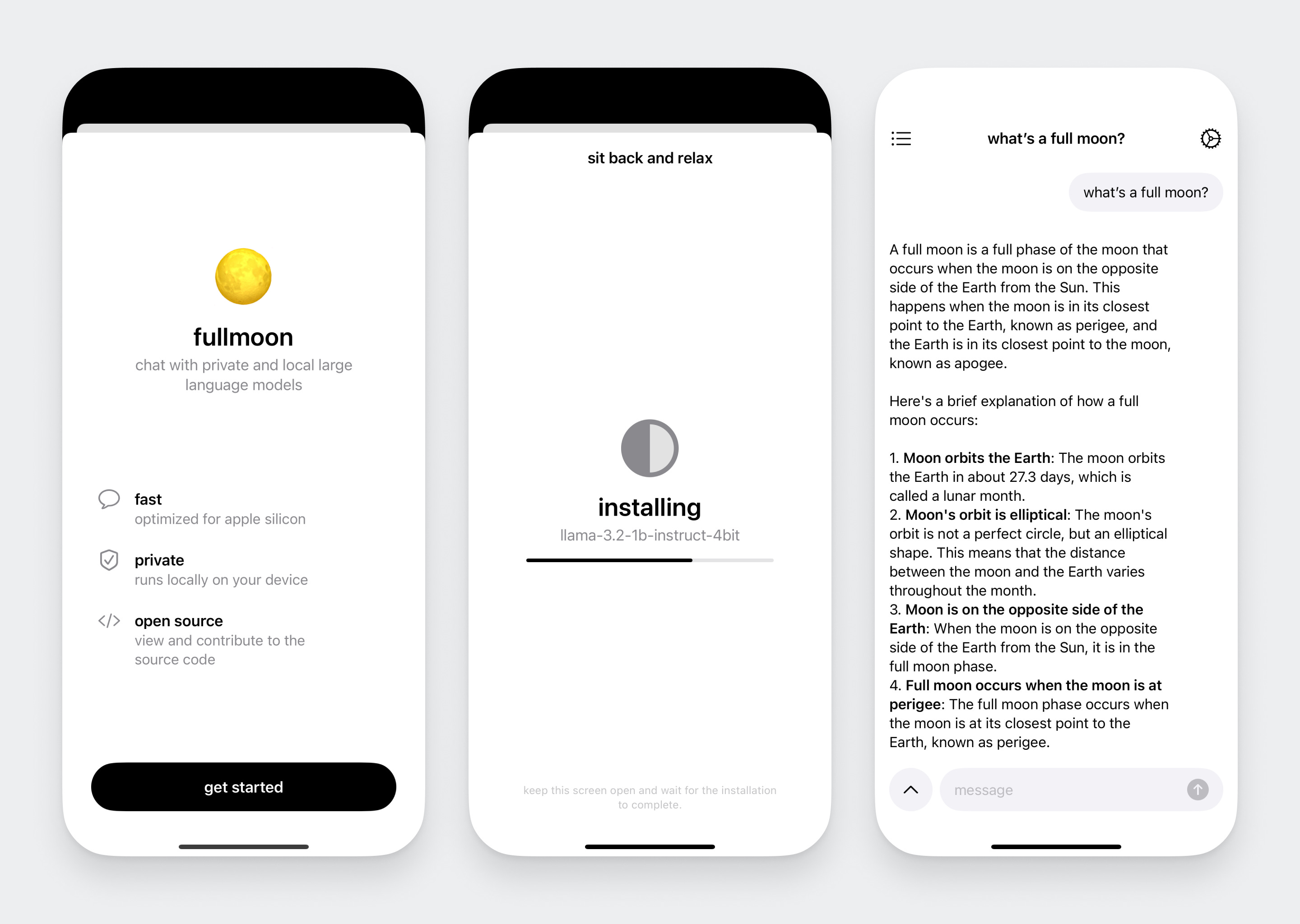
Jetzt dürft ihr aber wirklich nicht zu viel von so einem kleinen Modell erwarten, das mit weniger als einem Hundertstel der Parameter auskommen muss, die etwa ein GPT-4 mitbringt. Dennoch ist die Geschwindigkeit beeindruckend. Nach kurzem Durchatmer vor der ersten Nachricht ergibt sich danach eine erstaunlich flüssige Konversation – auf sehr niedrigem Niveau, aber immerhin.
Ausnehmend hilfreiche Chats hat man mit fullmoon natürlich nicht, die Qualität der Antworten reicht zu nicht mehr als einer netten Tech-Demo. Das dahinterstehende Start-up Mainframe hat allerdings große Pläne. Ihr Ziel: “we’re building a future operating system with AI as the default”. Ob das jetzt auf fullmoon aufbaut, bezweifle ich. Viel mehr will Gründer Singer damit einen Open-Source-Grundstein legen, der von der Community weiterentwickelt wird. Multimodalität, Anbindungen an iOS-Shortcuts, mehr Modelle, detaillierte Einstellungen – alles denkbar für ihn. Dürfen dann andere implementieren.
Open-sourcing and releasing fullmoon
Die meisten meiner Passwörter lasse ich von Chrome automatisch generieren. Ich bin seit Jahren Gefangener des Google-Passwortmanagers und kann ihm einfach nicht entfliehen. Hin und wieder kommt es aber auch vor, dass ich am iPhone auf Apples hauseigenen Passwortgenerator zurückgreifen muss.
Und tatsächlich ist mir schon unterbewusst aufgefallen, dass sich Apples Passwörter “weniger sicher” anfühlen, weil sie aus meistens zwei Fantasiewörtern bestehen. Zum Beispiel: “funrus-Hommez-kajzo7”. Das ist offenbar kein Zufall, wie Passwort-Nerd Ricky Mondello anno 2018 erklärt hat. Weil das Thema nach wie vor aktuell ist und die Frage Leute beschäftigt, hat er es in seinem Blog nochmal hochgeholt.
To make these passwords easier to type on suboptimal keyboard layouts like my colleague’s game controller, where the mode switching might be difficult, these new passwords are actually dominated by lowercase characters. And to make it easier to short-term have in your head little chunks of it to bring over to the other device, the passwords are based on syllables. That’s consonant, vowel, consonant patterns. With these considerations put together, in our experience, these passwords are actually a lot easier to type on a foreign, weird keyboard, in the rare instances where that might be needed for some of our users.
So yes, the passwords that Apple Passwords generates do contain gibberish two-syllable “words”. The syllables help them to be memorable briefly, but still not memorizable. I hope this helps!

This post briefly summarizes part of a talk I gave in 2018. All information in this post has been accessible on YouTube since then. There is no new information or news in this post. On Mastodon recently, jsveningsson@mastodon.social asked me: Having an annoying argument on Threads about Apple generated passwords. Every iOS Password (like hupvEw-fodne1-qabjyg) [...]
Personalization: The For You feed becomes increasingly personalized over time, with up to 80% of videos matching predefined user interests after about an hour of scrolling. In the other side the highest amount of shared videos among users occurs within the first 15 minutes of using the app, decreasing later as content becomes more personalized.
Commercial Content: On average, 21% of videos in users’ watchlists were from accounts indicating commercial interest, without being labeled as official ads. This is in addition to the 20% of videos that are official ads, that we have previously measured.
User Perception: In our survey, users estimated that every second post on TikTok is an advertisement or product recommendation, closely matching our findings on the prevelance of commercial content.
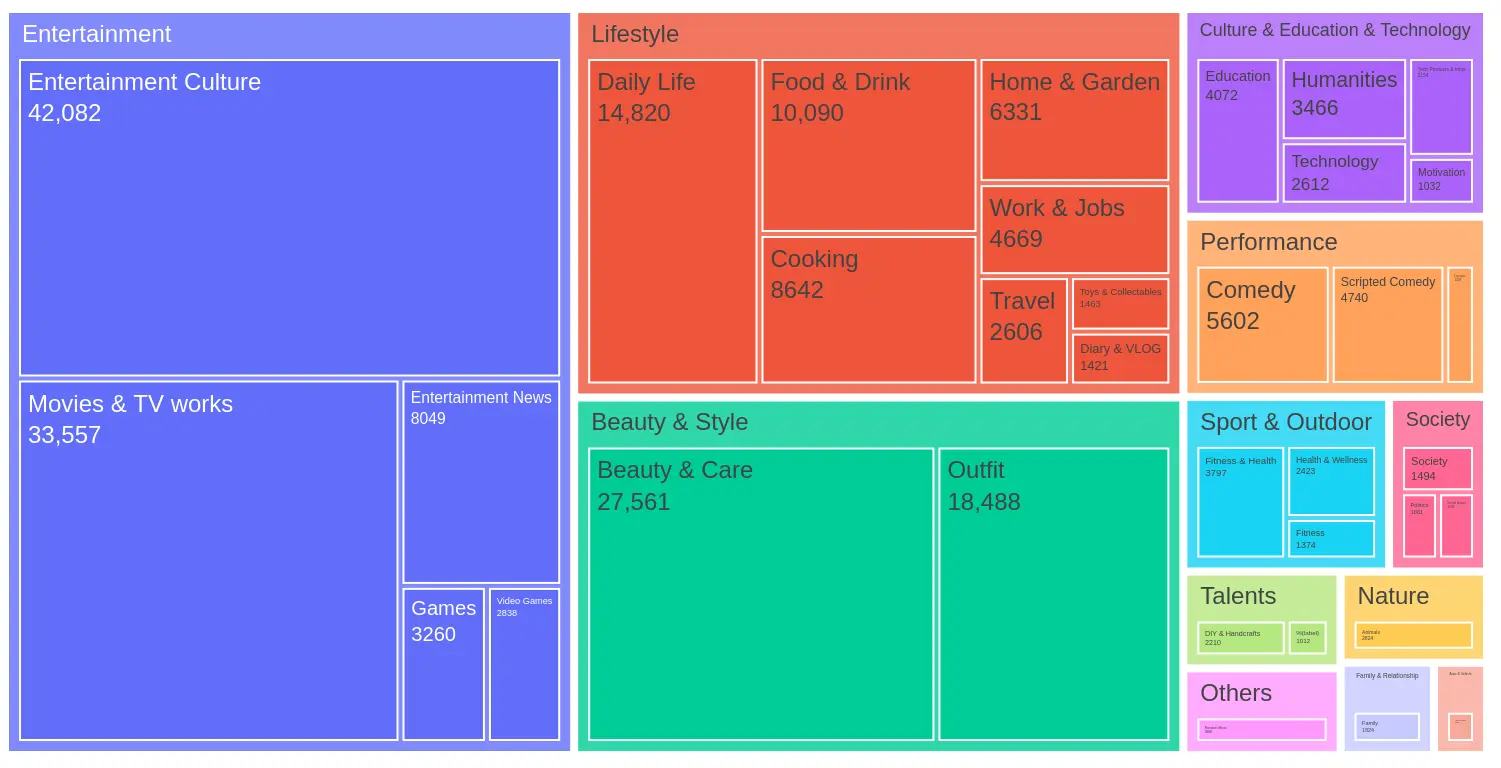
An analysis of the user journey
Cyberdecks faszinieren mich ja sowieso. Und wenn sie dann auch noch orange Knöpfe haben, bin ich hin und weg. Brauch ich nicht, aber will ich trotzdem haben. Vermutlich nützlicher als mein Rabbit R1.
we are a small team of one and a half people - our goal is, well, we don’t have a goal - we just want to have fun and make cool stuff
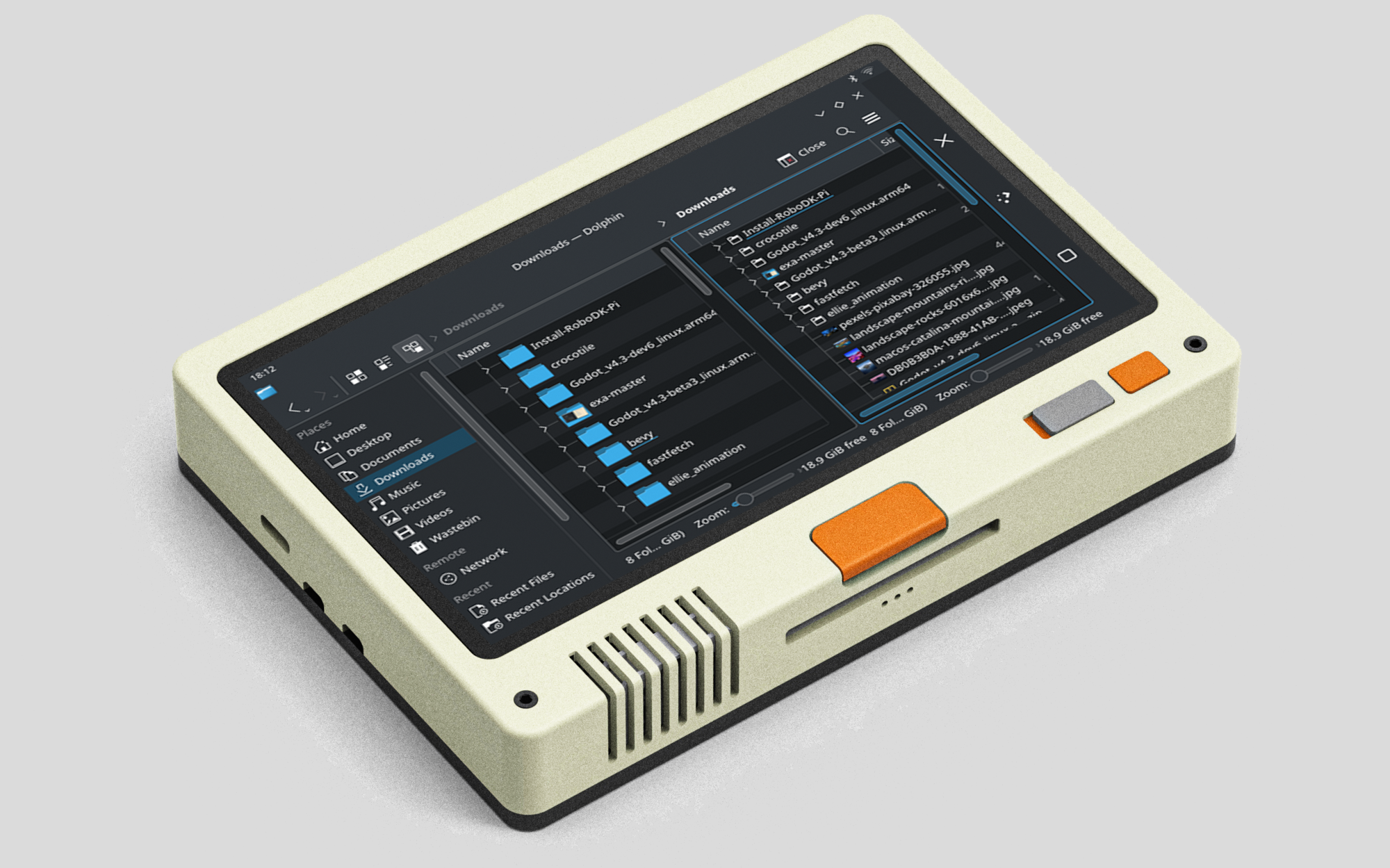
pilet - soulscircuit